
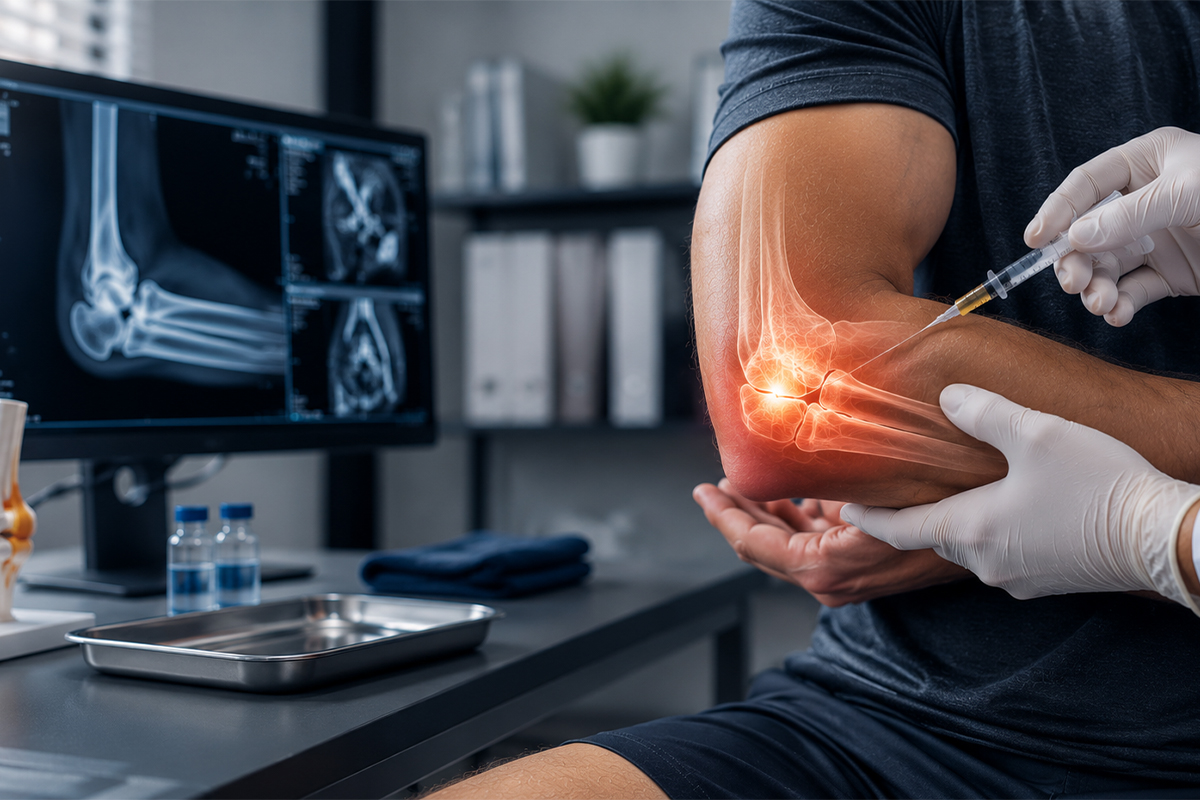
Stem Cell Therapy for Elbow Injuries
Elbow injuries are common musculoskeletal conditions affecting athletes, active individuals, and people exposed to repetitive arm movements. They may result from acute trauma, repetitive strain, overuse, or degenerative changes affecting the tendons, ligaments, cartilage, or joint.
Common conditions include tennis elbow (lateral epicondylitis), golfer’s elbow (medial epicondylitis), tendon injuries, ligament injuries, elbow dislocation, fractures, and cartilage disorders. Depending on the underlying condition, patients may experience pain, weakness, stiffness, reduced range of motion, and difficulty performing everyday or athletic activities.
With advances in regenerative medicine and orthobiologics, researchers are investigating biological therapies, including mesenchymal stem cells (MSCs), for their potential role in supporting tissue repair and functional recovery. However, the level of evidence varies considerably between different elbow conditions and treatment approaches.
Common Elbow Injuries
Elbow disorders can involve different structures around the joint, including:
- Tennis Elbow (Lateral Epicondylitis): A condition commonly associated with repetitive loading of the tendons on the outer side of the elbow.
- Golfer’s Elbow (Medial Epicondylitis): A tendon disorder affecting the inner side of the elbow.
- Biceps and triceps tendon injuries.
- Ligament injuries, including Ulnar Collateral Ligament (UCL) injuries.
- Cartilage and joint injuries.
- Radial head and other elbow fractures.
- Elbow dislocations.
- Certain nerve-related conditions affecting the structures around the elbow.
Accurate diagnosis is essential because different elbow conditions require different treatment strategies.
How Can Regenerative Medicine Support Elbow Recovery?
Current research is investigating several orthobiologic approaches, including mesenchymal stem cells, platelet-rich plasma (PRP), and other biologically derived products.
These approaches are being studied for their potential to:
- Support the biological environment surrounding injured tissues.
- Modulate inflammatory responses.
- Support tendon and soft-tissue repair.
- Improve function in selected tendinopathy conditions.
- Complement structured rehabilitation and physical therapy.
Some clinical studies have reported encouraging findings with selected orthobiologic treatments for elbow disorders. However, outcomes vary between studies, and additional high-quality clinical research is required to establish standardized treatment protocols.
Regen's Approach to Elbow Injuries
At Regen, treatment begins with a comprehensive medical evaluation to identify the underlying cause of elbow pain and determine the extent of tendon, ligament, cartilage, or joint involvement.
Depending on the physician’s assessment, the treatment plan may include:
- Comprehensive orthopedic evaluation.
- Diagnostic imaging when clinically indicated.
- Stem cell therapy for appropriate cases following medical assessment.
- Individualized regenerative medicine protocols.
- Image-guided procedures when appropriate.
- Physical therapy and rehabilitation.
- Progressive strengthening and range-of-motion exercises.
- Regular clinical follow-up to monitor treatment response.
Each treatment plan is individualized according to the patient’s diagnosis, medical history, functional requirements, and treatment goals.
The Importance of Rehabilitation
Physical therapy and rehabilitation are essential components of managing many elbow injuries, particularly overuse-related tendon disorders.
Rehabilitation programs may focus on:
- Restoring range of motion.
- Improving forearm and arm strength.
- Increasing tendon load tolerance.
- Improving joint stability and functional movement.
- Gradually returning the patient to sports or daily activities.
Regenerative therapies should therefore be considered as part of a comprehensive treatment strategy, rather than a replacement for rehabilitation, conventional medical treatment, or surgery when surgery is clinically indicated.
What Does the Research Say?
Current reviews indicate that orthobiologics for elbow injuries represent an evolving area of regenerative medicine research. Some biological therapies have demonstrated encouraging results in selected tendon disorders, particularly certain forms of elbow tendinopathy.
However, evidence specifically supporting stem cell therapy for elbow injuries remains limited. Current research does not provide sufficient evidence to establish stem cell therapy as a routine treatment for all elbow tendon or joint disorders.
Recent clinical reviews have also highlighted the limited number and variable quality of studies evaluating biologic treatments for elbow conditions. Further well-designed clinical trials are needed to determine optimal cell sources, treatment protocols, patient selection criteria, and long-term safety and effectiveness.
For this reason, regenerative treatments should be considered on an individual basis following an accurate diagnosis and comprehensive medical evaluation, with treatment decisions guided by current scientific evidence and qualified healthcare professionals.