
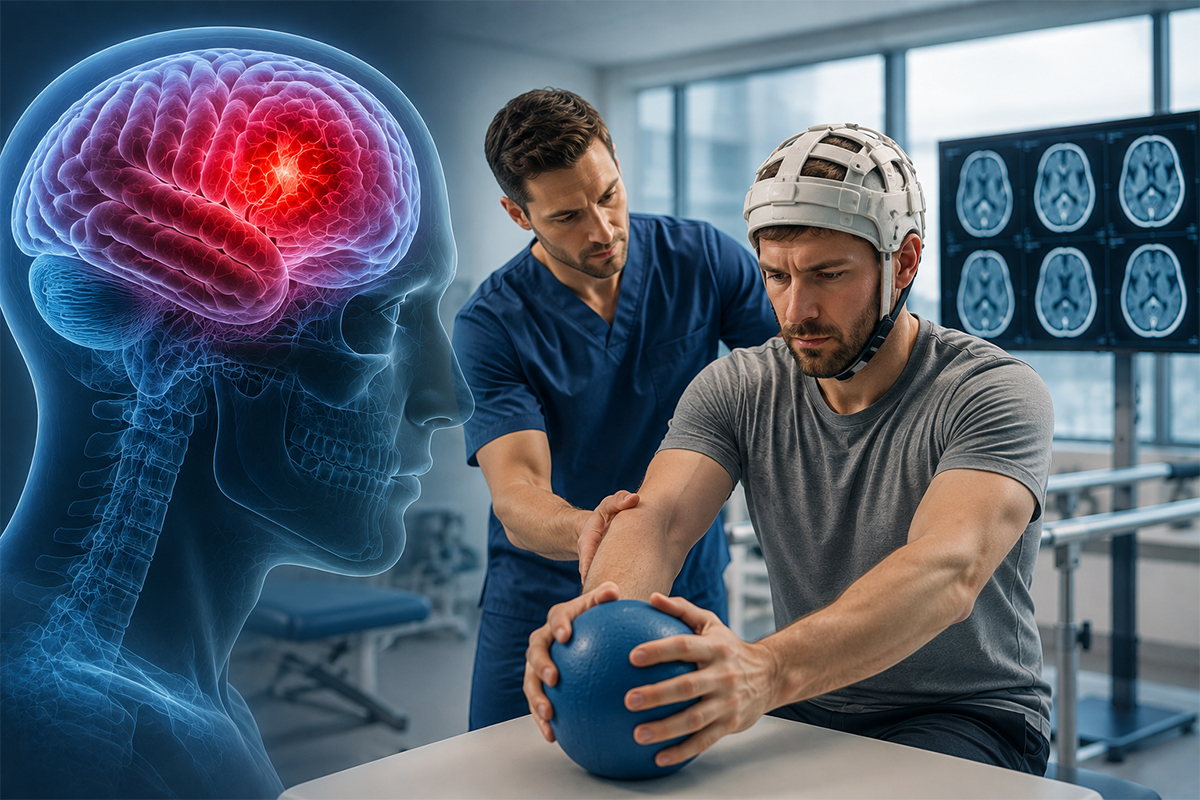
Traumatic Brain Injury Treatment
Traumatic Brain Injury (TBI) is a neurological condition that occurs when an external force causes injury to the brain. It may result from falls, motor vehicle accidents, sports-related injuries, or direct impact to the head.
TBI can range from a mild concussion to more complex injuries that affect movement, cognition, communication, behavior, or other neurological functions. Because every injury is different, proper medical assessment, early management, and individualized rehabilitation are essential components of care.
Common Symptoms of Traumatic Brain Injury
Symptoms vary depending on the severity and location of the injury. Some symptoms may appear immediately, while others can develop later.
Possible symptoms include:
- Headache and dizziness.
- Balance and coordination problems.
- Difficulty concentrating or remembering information.
- Sleep disturbances.
- Sensitivity to light or sound.
- Fatigue and reduced energy.
- Changes in mood or behavior.
- Speech or communication difficulties.
- Weakness or impaired motor control in more severe injuries.
Severe, worsening, or concerning symptoms following a head injury require urgent medical evaluation.
How Is Traumatic Brain Injury Evaluated?
Evaluation typically begins with a detailed history of the injury, followed by neurological and functional assessment.
Depending on the patient’s condition, evaluation may include:
- Neurological examination.
- Assessment of consciousness and cognitive function.
- Evaluation of memory, attention, and concentration.
- Balance and coordination assessment.
- Assessment of muscle strength and movement.
- Speech and language evaluation when indicated.
- CT scans or Magnetic Resonance Imaging (MRI) when clinically appropriate.
- Psychological and behavioral assessment when necessary.
This comprehensive evaluation helps identify the patient’s specific needs and guides the development of an individualized treatment and rehabilitation plan.
The Role of Rehabilitation After Traumatic Brain Injury
Rehabilitation is an important component of care for many patients experiencing persistent effects following TBI, particularly when the injury affects movement, cognition, communication, or independence.
A rehabilitation program may include:
- Physical therapy to improve movement, strength, and balance.
- Occupational therapy to support independence in daily activities.
- Speech and language therapy to address communication and swallowing difficulties when necessary.
- Cognitive rehabilitation targeting attention, memory, and executive functions.
- Balance and neuromuscular coordination training.
- Psychological and behavioral support.
- Family education to help caregivers support the patient’s recovery.
The rehabilitation program is adjusted according to the affected functions, severity of injury, and individual response.
Regenerative Medicine and Traumatic Brain Injury
Regenerative medicine is an emerging research field investigating the potential use of stem cells and cell-based therapies for neurological conditions, including traumatic brain injury.
Current research is exploring whether these approaches may influence the environment surrounding neural cells, regulate inflammatory responses, support neuroprotection, and contribute to tissue repair mechanisms.
However, stem cell therapy for TBI remains a research area and is not currently an established standard treatment for all patients. Any regenerative approach should therefore be considered on an individual basis, taking into account the available scientific evidence and the patient’s medical condition.
Regen's Approach to Traumatic Brain Injury Care
At Regen, patients undergo a comprehensive assessment designed to identify neurological, functional, and rehabilitation needs.
Depending on the individual’s condition, the program may include:
- Comprehensive neurological and functional assessment.
- Review of medical imaging and diagnostic findings.
- Neurological rehabilitation programs.
- Physical and occupational therapy.
- Speech and communication therapy when indicated.
- Cognitive rehabilitation programs.
- Regular monitoring of functional progress.
- Evaluation of regenerative medicine options for appropriate cases.
- Nutritional and lifestyle support according to individual medical needs.
The treatment and rehabilitation plan can be adjusted throughout the recovery process based on clinical findings and the patient’s response.
Supporting Neurological Function and Quality of Life
The goal of TBI management extends beyond controlling symptoms. Comprehensive care aims to help patients regain as much function as possible and improve their ability to participate in everyday activities.
Treatment goals may include:
- Improving mobility and balance.
- Supporting cognitive function.
- Enhancing communication abilities.
- Promoting independence in daily activities.
- Improving sleep quality.
- Supporting psychological well-being.
- Facilitating a safe return to education, work, or sports when appropriate.
Recovery varies significantly between individuals and may depend on the severity and location of the injury, age, overall health, timing of rehabilitation, and individual response to treatment.
What Does the Research Say?
Research continues to advance our understanding of traumatic brain injury and the mechanisms involved in neurological recovery. Specialized rehabilitation remains an important component of long-term care for patients experiencing persistent functional effects after TBI.
Within regenerative medicine, stem cells and other cell-based therapies are being investigated as potential future approaches, particularly for their possible roles in neuroprotection, modulation of inflammation, and tissue repair.
Although some early studies have reported encouraging findings, current evidence remains insufficient to establish stem cell therapy as a standard treatment for traumatic brain injury. Therefore, regenerative interventions should be provided within specialized medical settings and considered as part of a comprehensive care strategy alongside established medical treatment and rehabilitation.