
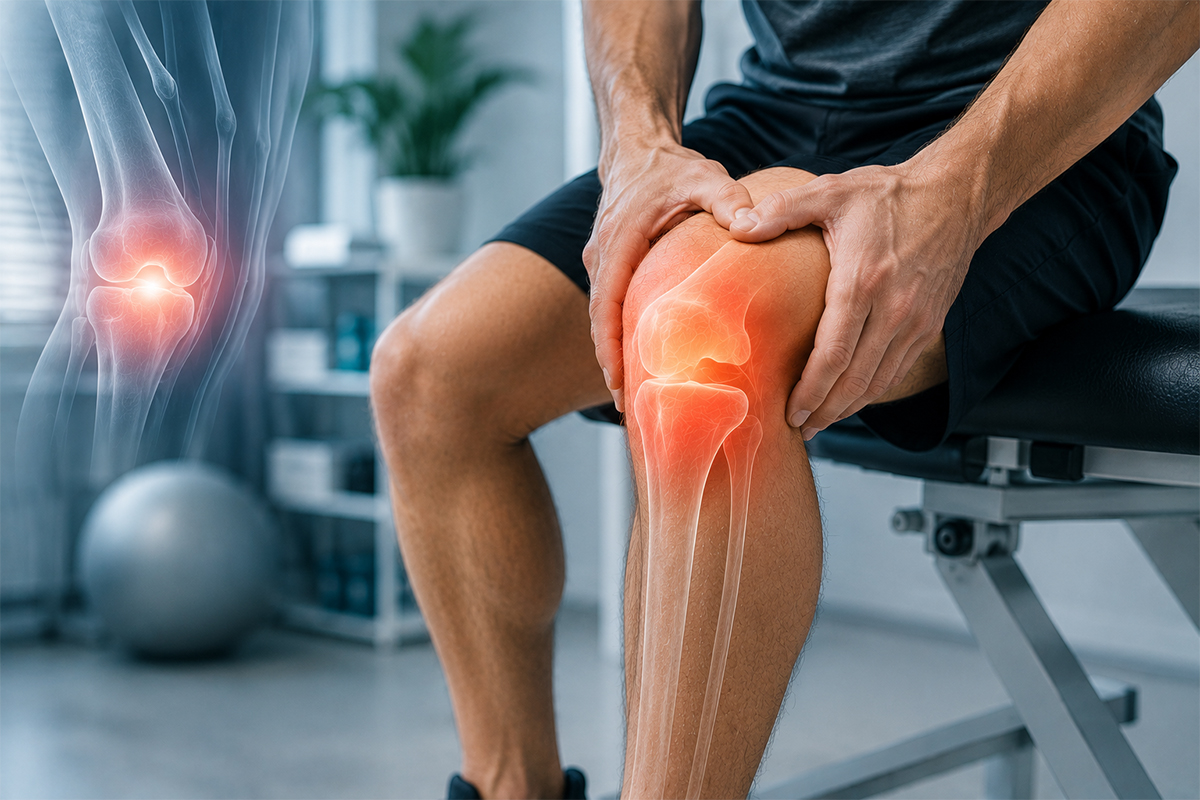
Knee Injury Treatment
Knee injuries are among the most common musculoskeletal problems, affecting athletes as well as people exposed to everyday accidents and physical stress. Injuries may involve the ligaments, cartilage, tendons, muscles, or bones surrounding the knee joint, potentially causing pain, swelling, instability, restricted movement, or difficulty performing daily and athletic activities.
Treatment varies according to the type and severity of the injury, its location, the patient’s age, activity level, and overall health. For this reason, accurate diagnosis and functional assessment are essential before developing an individualized treatment plan.
Common Types of Knee Injuries
Knee injuries can occur as a result of sudden movements, twisting, direct trauma, repetitive stress, or sports-related activity.
Common knee conditions include:
- Anterior Cruciate Ligament (ACL) injuries.
- Posterior Cruciate Ligament (PCL) injuries.
- Medial and lateral collateral ligament injuries.
- Meniscus tears.
- Articular cartilage injuries.
- Tendon injuries and inflammation.
- Strain of the muscles surrounding the knee.
- Overuse-related sports injuries.
Symptoms may range from mild discomfort to significant instability, swelling, or difficulty bearing weight.
How Are Knee Injuries Evaluated?
Evaluation begins with a comprehensive clinical assessment designed to determine the nature of the injury and its effect on knee function.
The assessment may include:
- Reviewing how the injury occurred and the symptoms that followed.
- Assessing the knee’s range of motion.
- Evaluating muscle strength and joint stability.
- Assessing pain and swelling.
- Using imaging studies when necessary, such as X-rays or Magnetic Resonance Imaging (MRI).
- Evaluating the patient’s physical activity and functional requirements.
This assessment helps determine whether the patient may benefit from conservative management, rehabilitation, surgical intervention, or other treatment options.
The Role of Rehabilitation in Knee Injuries
Rehabilitation is an essential component of recovery for many knee injuries, whether treatment is conservative or follows a surgical procedure.
A rehabilitation program may include:
- Exercises to restore range of motion.
- Strengthening of the muscles surrounding the knee.
- Balance and neuromuscular control training.
- Progressive weight-bearing and movement exercises.
- Sport-specific exercises.
- A structured return-to-sport program.
- Regular assessment of strength, flexibility, and function.
The rehabilitation program is progressively adjusted according to the patient’s recovery stage and response to treatment.
Regenerative Medicine for Knee Injuries
Regenerative medicine has become an area of increasing scientific interest in the management of musculoskeletal conditions, including certain knee injuries.
Research is investigating the potential use of stem cells and cell-based therapies to support the biological environment of damaged tissues and promote the body’s natural repair mechanisms.
These approaches are being studied in different conditions involving cartilage, tendons, and joints, although the level of clinical evidence varies depending on the specific application.
It is important to note that stem cell therapy is not an established standard treatment for all knee injuries. Its suitability should therefore be determined on an individual basis following a thorough medical assessment and consideration of the available scientific evidence.
Regen's Approach to Knee Injury Treatment
At Regen, treatment begins with a comprehensive evaluation before selecting the most appropriate intervention. Each program is designed according to the nature of the injury and the patient’s individual needs.
Depending on the condition, the treatment plan may include:
- Comprehensive clinical and functional assessment.
- Appropriate diagnostic imaging when required.
- Physical therapy and rehabilitation programs.
- Specialized exercises to improve strength, stability, and mobility.
- Regular monitoring of recovery.
- Evaluation of regenerative medicine options for appropriate cases.
- A gradual return-to-sport program when applicable.
The medical team monitors the patient’s progress and adjusts the treatment plan according to clinical findings and response to therapy.
Knee Injuries and Return to Sport
Returning to sports should not depend solely on the disappearance of pain. Athletes need to regain appropriate strength, mobility, joint stability, and neuromuscular control before returning to demanding physical activity.
A return-to-sport program may progress through several stages, beginning with restoration of movement and strength, followed by more sport-specific exercises and eventually activities involving jumping, landing, acceleration, and changes of direction.
The timing of return should be individualized and based on functional assessment rather than a fixed timeframe.
What Does the Research Say?
Current research indicates that successful management of knee injuries depends largely on identifying the specific injury and its severity, together with appropriate rehabilitation to restore function and reduce the risk of persistent symptoms or recurrent injury.
At the same time, regenerative medicine and stem cell-based therapies continue to be investigated for their potential role in supporting cartilage and musculoskeletal tissue repair. Although some early studies have reported promising findings, additional high-quality clinical trials are needed to establish their effectiveness and long-term safety and to determine the most appropriate cell types, doses, and delivery methods.
For this reason, regenerative treatments should be considered following a thorough medical evaluation and, when appropriate, integrated into a comprehensive treatment plan that includes rehabilitation and established therapies.